William Stoker and the case of the stolen umbrellas
A little more background to the story on BBC2's A House Through Time
Judging by the conversations on Twitter, many who watched the first episode of A House through Time on 8 April were outraged at the harsh sentences meted out on the two orphaned boys, Richard Ferguson and Edward Stuart. After all, they’d only stolen two umbrellas from William Stoker’s home at 5 Ravensworth Terrace in Newcastle. Hardly a heinous crime.
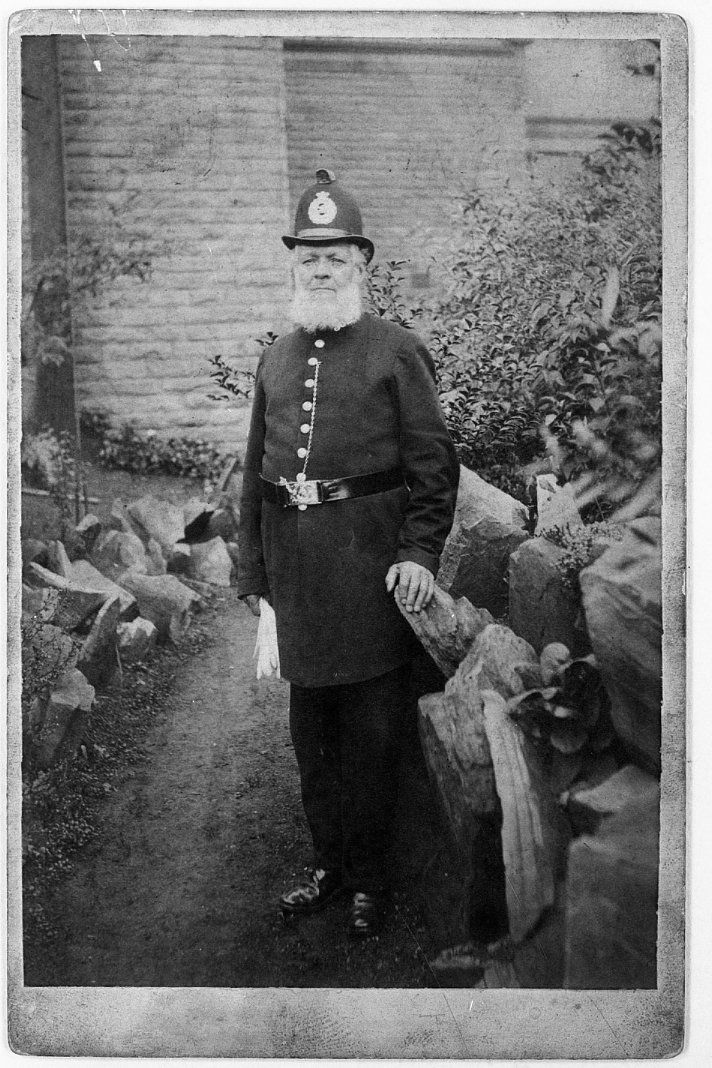
I wonder how my Victorian policeman great great grandfather would have handled the situation. Thomas Bottomley was known for his more gentle style of policing in Manningham, Bradford and I’d like to think he’d have been more lenient – even though the police had to follow strict rules in making sure criminals were brought to justice. He was only once reported for neglect of duty and never for any of the other misdemeanours that other constables were frequently in bother for. Perhaps his neglect of duty was for turning a blind eye to a petty theft by two kids. Perhaps he clipped them round the ear, took the stolen property off them and returned it to its owner. We’ll never know.
But of course, Thomas was a constable in a professional police force. He was guaranteed a wage and worked regular, though long, hours.
In contrast, Newcastle in 1835 had no formal police force. Instead it relied on watchmen to look out for lurking strangers during the night, and unpaid parish constables whose primary duty was to preserve the peace.
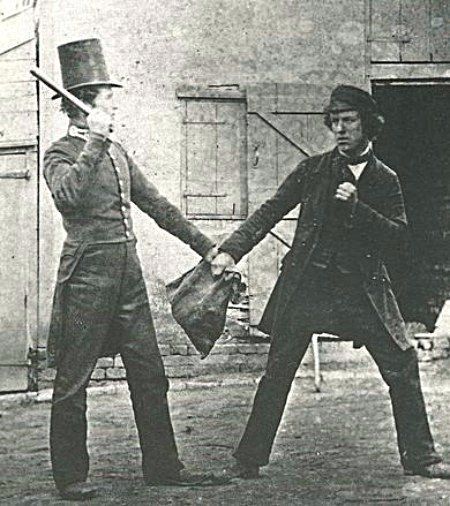
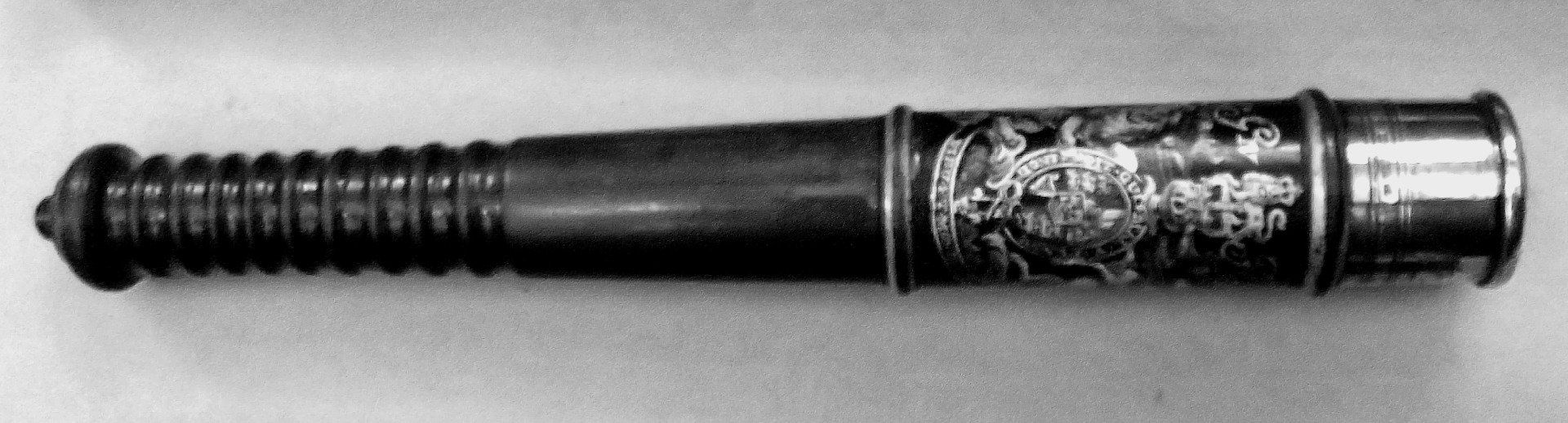
Those parish constables were elected annually by parishes and townships. The appointments were compulsory and often unpopular with the incumbents who were usually already following a trade or occupation. As well as a peace-preserving function their roles included numerous and diverse tasks such as collecting county and parish rates, finding transport for military forces, swearing the stocks were in good order and ready for use – and even that people regularly attended church. They had little or no value in crime prevention beyond that of any other able-bodied man, aside from their (often ornately decorated) staff of office. This staff was their only symbol of authority and a useful weapon of self-defence where necessary.
So did parish constables earn any money for their compulsory work?
The parish constables were paid on a sort of piece work basis – in that any monies they did receive in exercising their public duties came through fees and perquisites (perks to you and me) arising from issuing warrants; granting summonses; special attendance at fairs, markets, and sessions; carrying maces; waiting Feasts; and from chance cases of assault and street brawls.
It was a flawed mode of paying men engaged in what was actually time-consuming and often arduous work and it led some parish constables to generate disturbances in order to obtain or extort fees – making them unpopular and devoid of any moral influence on the population. Despite various Police Acts, this type of policing continued in Britain to some degree in a number of districts until the 1856 County & Borough Police Act made having a professional, trained police force compulsory.
It led to some curious goings on, and I particularly liked this tale of Yorkshire-Lancashire rivalry which came to light when a select committee set up by Palmerston, then Home Secretary, to consider the expediency of adopting a more uniform system of police in England, Scotland and Wales, published its report in 1853.
It seemed that Yorkshire police in Todmorden, a town straddling the Yorkshire-Lancashire border, had insinuated that Lancashire constables were going over to Yorkshire for the sole purpose of obtaining cases to bring before the magistrates. Of course, the Yorkshiremen, still working as parish constables, felt they were being robbed of their potential fees and earnings and they complained bitterly. The truth was that properly trained men in the Lancashire constabulary, seeing drunkenness, brawling in public houses and pugilistic fighting, were crossing the invisible county border line to suppress the disorders.
Captain Woodford, chief constable of Lancashire, took action. Ordering his men to only venture over the border when in pursuit of thieves, he declared ‘It is now the business of Yorkshire people to keep order in their own county.’ In consequence, disorders in Yorkshire were left to continue and escalate.
Back to the policing ‘black hole’ of Newcastle
Given the reactive, rather than pro-active, role of the parish constable (especially since he was following his own paid occupation) it would have been up to William Stoker to engage the services of one to help in bringing a prosecution.
Among the witnesses listed on the court indictment sheet and not highlighted in the programme (there’s never space to include everything I guess when there’s so much other exciting information) was another Thomas: Thomas Barkas. He was the local parish constable and we know this as he’s mentioned as such in other local newspaper crime reports of the time.
So it’s likely that he and Stoker worked together to bring the boys to court once William had reported the crime, had the culprits identified by various witnesses and in his role as a lawyer, helped with issuing their arrest warrant. The parish or township which had appointed Constable Barkas would have paid him for this work and it is likely that Stoker also gave him some financial reward. A nice little earner, as they say.
Barkas would also have been responsible (and paid) for keeping Richard and Edward holed up in a lock-up until they came before court, usually the magistrates’ in the first instance. The magistrates would either dismiss the case, refer it to petty sessions or for more serious cases, refer it to the Assizes or Quarter Sessions.
There's no report of this case ever coming before the magistrates’ court, although that doesn’t mean it didn’t. The indictment states the boys were tried for larceny (simple theft), a case that would have usually been heard at the Quarter Sessions, so it is curious that their case was dealt with at the Assizes.
Was it the imminence of the Newcastle Assizes, scheduled for the first week in August 1835 and only held annually in the town that made Stoker push for the trial there? Or was he hoping the crime would be classed as theft from a dwelling house rather than larceny? At the time of the umbrella theft, 31 July 1835, stealing from a dwelling house was a capital crime, meaning it could be punishable by death – although the punishment was more likely to be commuted to transportation.
Of course, Stoker knew the law very well and undoubtedly had influence among other law enforcers of Newcastle. He’d have been familiar with the sort of sentence the boys would receive – it was usual for the times. Although they were ‘just umbrellas’ worth around 5 shillings according to the reports, any theft was an attack on capital and there was no leniency, even for small, light, low-value items.
But was William Stoker any more unkind than his peers?
In the growing urban areas of nineteenth-century Britain, the widening chasm between rich and poor often led to the latter looting the former. Through his work, Stoker would have encountered countless examples of petty thieves progressing to career criminals – even Richard may have already been on the slippery slope as he’d already been in court for his involvement in another theft a week or two earlier (although he was acquitted). Naturally, better-off folk were keen to protect their property from what they saw as a ‘feckless underclass’, so did Stoker, with his legal clout, push the umbrella theft case as an opportunity to make an example of these boys, perhaps not only for vengeance but to protect his well-to-do neighbours from similar crimes? Can his actions – even though they point to him just getting these boys off the streets of Newcastle – be thought of more kindly? Might he have believed he was putting Richard and Edward on the right tracks by halting their descent into a life of crime? We’ll never know.
Proper policing in Newcastle
As it was, tackling crime in Newcastle soon came under the watchful eye of a new professional police force. On 2 May 1836, less than a year after the umbrella theft saga, the Newcastle on Tyne City Police was established.
Illustrating the mood of the time, a newspaper report described it thus:
The new police appear a vigorous, well-conducted & intelligent body of men & we learn from several quarters that since they commenced duty the number of skulking vagabonds who have been accustomed on various pretences to annoy respectable inhabitants have materially decreased.’
Clearly, attitudes to those in less fortunate circumstances were not about to improve.